

Vanguard Blinks – The “Never Crypto” Giant Pivots


How an $11 trillion giant went from “never crypto” to lowering all the sails.
For nearly two years, Vanguard was the lone ship anchored stubbornly at the dock while the rest of Wall Street sailed headfirst into digital assets. BlackRock, Fidelity, Franklin Templeton, Morgan Stanley – one by one, the industry’s giants charted a course into Bitcoin, Ethereum, tokenization, and on-chain products. Vanguard, meanwhile, stayed tied to the pier, repeating the same refrain: no crypto, not now, not ever.
It became almost symbolic. As trillions of dollars in institutional capital flowed toward the future of market infrastructure, Vanguard – the world’s second-largest asset manager – insisted it would wait for “calmer waters” before even listing a spot Bitcoin ETF. While BlackRock launched IBIT, Fidelity launched FBTC, and a wave of new crypto funds entered the market, Vanguard stayed still. Not passive, not cautious – stationary.
And then, almost overnight, everything changed.
Just 18 months after its former CEO declared that Vanguard would “never” offer crypto ETFs and saw no place for Bitcoin in long-term portfolios, the firm reversed course in dramatic fashion. Starting this week, Vanguard’s 50 million brokerage customers can trade ETFs and mutual funds holding Bitcoin, Ethereum, Solana, XRP – even Dogecoin and Litecoin. The world’s most conservative, slow-moving asset manager has abruptly hoisted its sails and entered the crypto waters it once refused to touch.
It’s rare to see a firm of this size change its mind so visibly, so quickly, and so completely. And for advisors, it marks a watershed moment – not just for Bitcoin, but for the modernization of the entire wealth management industry.
Until recently, Vanguard’s position couldn’t have been clearer. In early 2024, the firm didn’t just avoid crypto – it actively rejected it. Tim Buckley, the former CEO, said bluntly:
“We have no plans to offer Vanguard Bitcoin ETFs or other crypto-related products. Cryptocurrencies’ high volatility runs counter to our goal of helping investors generate positive real returns over the long term.”
Buckley repeatedly went on record dismissing Bitcoin entirely:
“Something like Bitcoin is just too volatile, and it’s not a store of value – it hasn’t been. It is speculative, really tough to think about how it belongs in a long-term portfolio.”
And then even more definitively: (this is the most famous one)
“You will never see a fund from Vanguard on Bitcoin. We tend to stay away from assets that don’t have underlying economic value. They don’t generate earnings or cash flows.”
He doubled down again, framing Bitcoin’s design as fundamentally flawed:
“Its value is based off scarcity – and an artificial scarcity at that. It’s tough to imagine where long-term returns come from other than speculation.”
As time passed, it became clear that holding onto this worldview carried a price. While Vanguard held its ground, the rest of Wall Street moved decisively into digital assets, capturing massive inflows and meeting a level of client demand that was no longer theoretical. Each month that passed made the cost of staying out of the market more visible – not because Vanguard lacked conviction, but because the industry itself was shifting beneath their feet.
As it turned out, not everyone inside Vanguard shared the former CEO’s views – and the break in philosophy became impossible to ignore. In one of the most unexpected pivots in modern finance, the most conservative institution on Wall Street brought in a leader with the exact background you’d never expect: a crypto strategist.
Salim Ramji – the BlackRock veteran who helped engineer IBIT’s explosive rise – walked into Vanguard with a playbook built on firsthand experience watching digital assets reshape global capital flows. He understood exactly where investor demand was headed, and he could see just how far behind Vanguard had fallen. His arrival wasn’t just a leadership change; it was the moment the firm signaled it could no longer afford to stand on the sidelines of the next financial era.
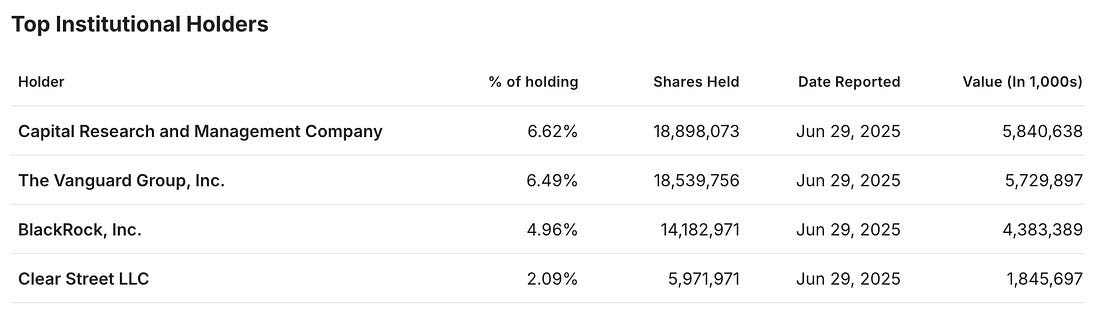
And here’s where the irony deepens. Even while Vanguard was publicly dismissing Bitcoin and refusing to list spot ETFs, it was quietly one of the largest shareholders of MicroStrategy – now Strategy – the most aggressive corporate Bitcoin accumulator in the world. Not because Vanguard made an active bet on Bitcoin, but because its massive index funds were required to hold the stock. For nearly two years, while the firm insisted Bitcoin had “no place” in a long-term portfolio, Vanguard’s own indexed products were indirectly exposed to more Bitcoin than almost any other asset manager on the planet.
It’s a detail most investors missed, but it highlights just how out of sync Vanguard’s old stance had become. The firm was rejecting Bitcoin with one hand… while holding one of the most Bitcoin-leveraged equities in existence with the other.

It was always just a matter of time before Vanguard turned the ship around – but what strikes us most is how quickly they ultimately did it. We heard commentary like, “Twenty months? They’re slow. They dragged their feet.” And our response was simple: not if you understand Vanguard. This is a firm that measures success in decades, not quarters.
And then came the moment no one expected – not even many inside the company.
In late November, Bloomberg broke the story: Vanguard would officially allow ETFs and mutual funds that primarily hold cryptocurrencies to trade on its platform. Not someday. Not after another review cycle. Starting last week. The same firm that refused to list BlackRock’s and Fidelity’s spot Bitcoin ETFs is now giving 50 million brokerage clients access not just to leaders like Bitcoin, Ethereum, and XRP, but also to more niche assets such as Solana, Dogecoin, and Litecoin.
In a statement to Bloomberg, Andrew Kadjeski, Vanguard’s head of brokerage and investments, explained why the firm finally moved:
“Cryptocurrency ETFs and mutual funds have been tested through periods of market volatility, performing as designed while maintaining liquidity. The administrative processes to service these types of funds have matured, and investor preferences continue to evolve.”
In other words: the products worked, the infrastructure matured, and clients demanded access.
Behind the scenes, Vanguard had been evaluating this shift since at least September – quietly building operational capacity, studying the regulatory landscape, and acknowledging a reality they could no longer ignore: crypto had become a permanent part of modern portfolio construction.
The result is one of the most dramatic philosophical reversals in the history of traditional finance. Vanguard didn’t just soften its stance – it abandoned it entirely, along with the old guard who protected it. For decades, the firm defined itself by conservatism, caution, and deliberate slowness. But once the tide turned, it moved with speed that would have been unthinkable under the old leadership.
And for RIAs, the message couldn’t be clearer: when the world’s most conservative asset manager embraces digital assets, the debate over whether crypto belongs in portfolios is definitively over.
Disclaimer: The information provided by The Crypto Advisor is for educational and informational purposes only and does not constitute financial, investment, or legal advice. The Crypto Advisor is not a registered investment advisor, broker-dealer, or financial planner. Nothing in this email should be interpreted as a recommendation to buy, sell, or hold any financial instrument or investment. Always consult with a licensed financial professional before making any investment decisions.





Responses